
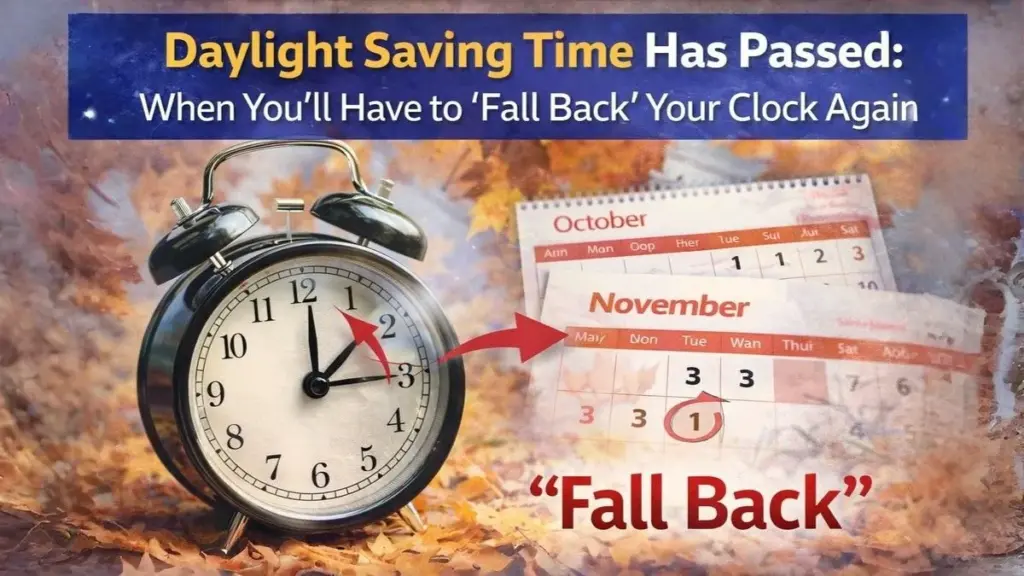
Daylight Saving Time Has Passed: With Daylight Saving Time already behind us for the year, attention naturally shifts to the next adjustment in the calendar—when clocks are set back again. This twice-yearly time shift continues to influence daily routines, especially in regions where it is still actively observed. While the concept may appear routine, its broader impact on sleep, productivity, and seasonal behavior remains significant.
The “fall back” transition marks the return to standard time, typically scheduled in early November in many countries that follow the system. According to reports and long-standing guidelines, clocks are moved back by one hour during the early morning, often at 2:00 a.m. This change not only alters how people experience daylight but also signals a deeper seasonal shift as winter approaches.

Why the Clock Adjustment Still Exists in Modern Systems
The origin of Daylight Saving Time dates back to efforts aimed at better utilizing natural daylight. By extending evening light during warmer months, societies historically reduced dependence on artificial lighting. When autumn arrives, the reversal ensures mornings are brighter, which is considered beneficial for commuting, schooling, and general safety.
However, in practical terms, the relevance of this system is increasingly debated. With modern energy consumption patterns changing and technology advancing, some experts question whether the adjustment still delivers meaningful benefits. A policy analyst recently noted, “The system made sense a century ago, but today its advantages are more nuanced and depend on lifestyle patterns.”

Expected Timeline for the Upcoming “Fall Back” Shift
In most regions observing Daylight Saving Time, the next clock rollback is expected in early November. The standard practice involves turning clocks back by one hour at 2:00 a.m., effectively repeating the hour from 1:00 a.m. to 2:00 a.m. This creates what many consider an “extra hour,” often associated with additional rest.
For example, someone who usually sleeps from 11:00 p.m. to 6:00 a.m. may technically get an extra hour that night without altering their schedule. However, this benefit may vary by case, as not everyone experiences the shift positively. For individuals with fixed routines or shift-based jobs, the adjustment can still feel disruptive despite the added hour.

How Daily Schedules Adjust to Shorter Evenings
Once the clocks move back, daylight fades earlier in the evening, which can subtly influence everyday habits. Activities such as outdoor exercise, social gatherings, and commuting may shift to earlier hours. For many, this requires a period of adjustment as the body’s internal rhythm aligns with the new timing.
This shift is closely tied to the circadian rhythm, the body’s natural clock that regulates sleep and alertness. Based on available studies, it can take several days for the body to fully adapt. In practical terms, maintaining consistent sleep schedules and limiting late-night screen exposure may help ease the transition.

Seasonal Mood and Health Considerations
The reduction in evening daylight often brings noticeable psychological changes. Some individuals report lower energy levels or reduced motivation as days grow shorter. In certain cases, this may be linked to seasonal patterns such as Seasonal Affective Disorder (SAD), though not everyone experiences it in the same way.
Health experts suggest simple adjustments to counter these effects. Spending time outdoors during daylight hours, staying physically active, and maintaining balanced nutrition can support overall well-being. While the extra hour of sleep may seem beneficial, the broader seasonal shift requires a more holistic adjustment.

Technology’s Role in Simplifying Time Changes
Unlike earlier decades, most modern devices now update automatically during time changes. Smartphones, computers, and connected systems adjust without user intervention, reducing the likelihood of missed changes. This automation has significantly improved convenience, especially in households with multiple devices.
That said, some appliances—such as microwaves, wall clocks, and older electronics—still require manual updates. Forgetting to adjust these can lead to minor disruptions in daily schedules. Verification is recommended, particularly for devices that do not sync with internet time servers.
Global Variations and Ongoing Policy Discussions
It is important to note that Daylight Saving Time is not universally observed. Countries in Asia, including India, do not follow this system, while parts of Europe and North America continue to implement it. This creates temporary differences in time coordination, particularly affecting international communication and travel planning.
There is also ongoing discussion in several regions about whether to discontinue the practice altogether. Some governments have reviewed proposals to adopt permanent standard time or permanent daylight time. As per guidelines and policy debates, no universal change has been implemented yet, and practices may continue to evolve in the coming years.
Adapting to the Next Time Change
Preparing for the “fall back” transition can make a noticeable difference in how smoothly it is experienced. Gradual adjustments to sleep timing, along with mindful scheduling of activities, may help reduce disruption. For instance, shifting bedtime slightly earlier in the days leading up to the change can support better adaptation.
In everyday terms, aligning routines with available daylight becomes essential. Planning outdoor tasks earlier and creating a consistent evening routine can help maintain productivity. While the change itself is brief, its effects can extend over several weeks depending on individual habits.
Disclaimer: This article is for informational purposes only and is based on general timekeeping practices and publicly available information. The exact implementation of Daylight Saving Time may vary by region and government policy. Readers are advised to verify local time change schedules through official sources, as rules and timelines may change over time.